

Development
People Changing Operations Through Technology
Nine · Development (Product) Team
Nine · 2025.12.04
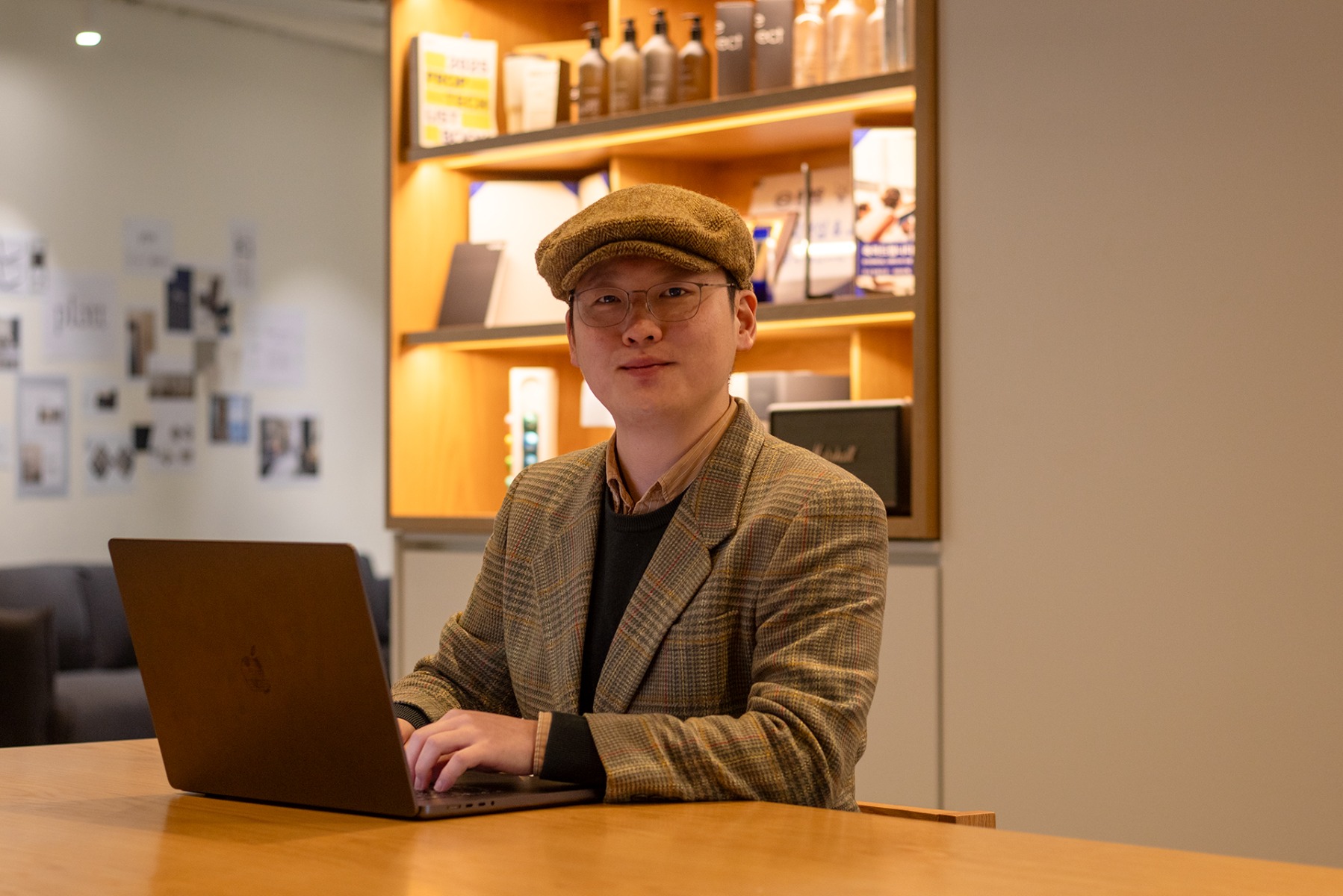
Hello🙌 Before we start the interview, please tell us about Handys Nine!
Hello. I'm Nine from the Handys Product team. I'm responsible for designing the OS (Operating System) structure of Handys. In the typical hotel and accommodation industry, people use something called a PMS (Property Management System). It's a system that manages room reservations and automates customer services like payments.
However, the OS that Handys is building covers a much broader scope than that. In addition to the services provided by existing PMS, we also provide hardware-integrated services like smart door locks and parking. Furthermore, the users of the system are not limited to general customers. We provide settlement management services to property owners and customized services for each target, such as partnership discounts to partner companies.
Through the OS, we've not only improved convenience for external customers. By automating what was previously managed manually to fit Handys' operations, we've significantly increased the work efficiency of internal team members. From this perspective, I can describe myself as someone who converts repetitive tasks into code so that team members can focus on more important work—customer satisfaction. (Laughs)
Within the Handys OS, what mission is Nine currently most focused on?
The scope of operations that Handys handles has expanded from accommodation to short-term rentals. Therefore, it's important that the entire process from reservation → move-in → checkout operates consistently, even if customers' stay patterns differ.
On this foundation, we launched the current Plott LIFE, a residential short-term rental platform service. People like international students or global business travelers don't find it easy to locate residential spaces in unfamiliar foreign countries. Plott LIFE is a service that helps these customers conveniently search for and contract properties through web and app, just as they would book a hotel. As Handys supports everything from move-in to checkout management, the operational burden on property owners is significantly reduced.
Currently, I'm most focused on ensuring that all services on this platform are provided stably. I believe that once this structure is solidified, Handys can stably expand operations regardless of what type of space we handle.
Please tell us about how Handys developers work.
Rather than small features, we prioritize a perspective that sees broadly how entire operations connect and function. On the Handys OS, multiple customers coexist—those who own spaces (owners), those who use spaces (guests), internal customers (team members), and external partners. Therefore, a perspective of care that doesn't lean too heavily toward any one side and a sense of balance are equally important.
Developers don't divide tasks into separate domains and assign them individually. It doesn't mean one person handles only the system and another handles only the interface. When solving problems, we first think about how they'll affect overall operations. That's why we list tasks each week in team meetings and discuss priorities based on their impact. We consider first how each decision will create change across the service before we move forward.
It's similar when setting the team's goals and direction. In the early stages of OS development, we focused on the system running stably. Later, we focused on improving customer experience. Now we're building features that can more broadly expand customer convenience. For next year, our goal is to establish a foundation where services tailored to diverse customer segments can operate to further strengthen customer satisfaction.
I believe the direction the Handys development organization is moving is aligned with the company's growth. Thanks to this, passion for work and personal growth naturally connect with the company's growth.
What does it mean when Handys says 'we convert operations into code'?
To me, "converting operations into code" isn't a grandiose technical term. It's closer to making people's time more valuable. In the past, there were many tasks that people had to manually and repeatedly handle, like entering reservations, coordinating schedules, and confirming payments. Now we're automating these repetitive tasks within the OS so that the system can handle in one go what people previously processed step by step.
As a developer, the most rewarding moment is when I can see this kind of change. When I see a task that used to take someone several hours get reduced to just a few minutes, it feels like more than just saving time—it feels like the operational method itself has changed to be technology-centered and naturally becomes established as a system. That's why I think "converting operations into code" means enabling the system to understand and process the judgments and repetitive tasks that people previously did through manual records and intuition. When operations are converted into code like this, ultimately, people—meaning customers—can receive greater value and focus more on customer satisfaction.
What kind of person do you think fits well at Handys? What kind of person do you want to work with?
People who want to find answers together seem to fit better than those who already know the answers. Within Handys, I've found that when we face new problems, a mindset that doesn't hesitate to ask questions and narrows down better answers through learning greatly accelerates growth.
We call this way of working PDCA (Plan-Do-Check-Action). Handys is a company that continuously creates new services and operational methods, so the cycle of constantly exploring the essence of problems, reflecting, and improving—the cycle of zero alignment—is very important. Naturally, developers encounter a broader range of problems and develop a much deeper perspective on how to view issues.
If you're someone who doesn't set limits and wants to gradually explore unfamiliar areas, you'd be a good fit with me and with Handys. I want to work with people who think about better solutions in a changing environment and want to implement those answers directly in operations and code.